Male Body Image: What Men Carry Into the Bedroom and Never Mention

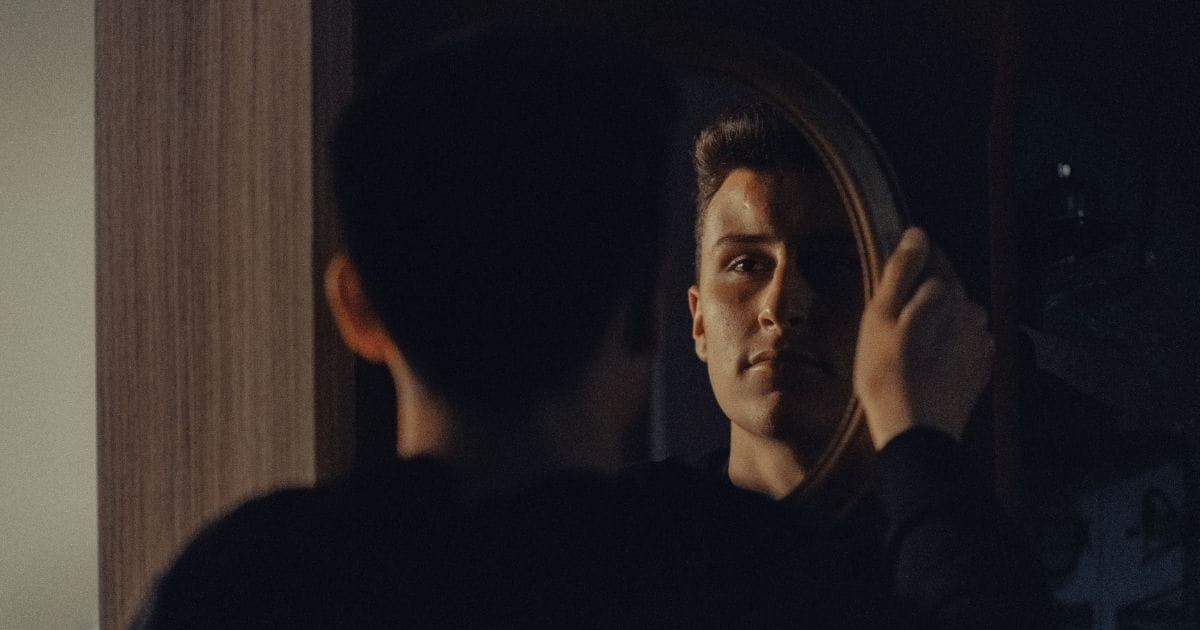
I was a thin kid. Looking back at old photos now, I can say it plainly: I was a good looking teenager, and for most of my teens and early twenties, I was thin. But somewhere in those years, I developed an insecurity about my body that never left me. My biggest flaw, as I saw it, was a flabby chest, what we would call man boobs, the kind that no amount of weight training would ever touch, and I started comparing myself to other guys long before there was any real reason to.
That comparison planted something that had nothing to do with the mirror. The struggle with taking my shirt off started in middle school, and it has lasted most of my adult life. Beaches, pools, anywhere that meant being shirtless in front of other people, became a quiet, constant struggle. Nobody around me would have guessed it. I was thin. By most measures, I looked fine. But I didn't feel fine, and that gap between how I actually looked and how I felt about how I looked is something I don't think enough men talk about.
When the Story Caught Up to the Body
Years later, I ended up in an industry built around client lunches and dinners, entertaining people for a living, and that's where the real weight gain started. I am a large man, in stature and in weight, and quite frankly, I absolutely love a great meal. Good food and good company is one of life's great pleasures in my book. But for me, that passion has come at a steep cost, and as the years went on, the weight gain got more pronounced.
Here's the strange part. By the time my body actually changed, that story about myself was already fully formed. It had been sitting there since I was a teenager, waiting. The weight gain didn't create the story. It just seemed to confirm one I'd already been telling myself for a long time.
The Conversation We're Not Having
Female body image gets talked about constantly, in magazines, in therapy, in casual conversation between friends. Men's body image barely gets mentioned at all, and I think that silence does real damage. It doesn't mean men aren't carrying it. It just means we carry it alone, without the language or the permission to talk about it out loud.
I see this in young men right now, and it worries me. Whether it's weight, or height, or whatever specific thing a given guy has fixated on, a lot of younger men seem to be carrying the same quiet self-doubt I carried at their age. And what I'm watching happen because of it feels like something close to an epidemic. Men choosing to disengage entirely from dating, from even trying, rather than risk being measured against a standard they've already decided they can't meet. Body image isn't the whole story behind that. But it's a real piece of it, and I don't think it gets named often enough.
What I had thirty-five years ago was a locker room and a handful of guys I actually knew. What young men have now is social media, filtered and doctored images at a scale I never had to compete with, and creative angles engineered specifically to make an ordinary body look extraordinary. It's not a fair comparison, because half of what they're comparing themselves to isn't even real. But the feeling it produces is just as real as anything I carried, and I suspect it's worse, because the standard it's measured against has been manufactured to be unreachable.
Comparison is the mechanism underneath all of it. It plants something in your head early, a sense that you don't measure up to some standard, and once it's in there, it doesn't need evidence to keep running. It just needs a mirror, or a beach, or someone else's body in a room. It plants the idea, and then it goes looking for proof, whether the proof is actually there or not. Mine started with other guys in a locker room before I had any real reason to believe I was different from them. I suspect that's more common than most men would ever admit.
The Part That Never Wavered
I met my wife carrying all of that. And in twenty-seven years, she never once gave me a reason to feel the way I felt about my body. She never shamed me. She never mentioned it. She loved me, fully, at every size I've ever been.
I want to be specific about what that actually looked like, because I think it matters more than the general statement. I was a present, engaged father. I was an attentive, helpful partner. And outside of her two pregnancies, we never went through any real, sustained drop in how often we came together physically. That self-consciousness I carried into every bedroom for decades never once cost me the thing I feared it would cost me. It just cost me peace, privately, for a long time, over nothing she was actually doing or thinking.
Her unwavering love for me, and the complete level of respect she has always shown when it comes to what I look like, is a large part of why I adore her so much.
When the Body Started Actually Failing
For most of my adult life, my body image struggle was exactly that: an image struggle, a story about how I looked that had almost nothing to do with what was actually true or what my wife actually felt. That's not the story I'm telling anymore.
I have Type II Diabetes, and it has caused foot neuropathy. I manage it with medication, and the disease has done real, physical damage. One of the consequences has been ED, not as a symptom of getting older, and not as an extension of the old story about how I look. This is a physiological complication of the disease itself. I've written more fully about what ED has meant for us in a separate post, but here it matters as part of this larger story: the first time in my life my body has actually, measurably failed me, rather than just looking a way I didn't like.
A Different Kind of Fear
I've spent a long time thinking about why this feels different from everything that came before it, and I think I finally understand it. The insecurity I carried for decades was really about the fear I had about how my wife saw me. In the times when our desire gap was heightened, this is one of the dark and ugly thoughts that crept into my mind. It turns out she was never the problem. This new fear isn't about being seen at all. It's about function. It's about time. It's about a body that is, in real and undeniable ways, not working the way it used to, regardless of what anyone thinks about it.
That's a harder thing to make peace with than vanity ever was. You can eventually learn that someone loves you at any size. It's much harder to make peace with nerve damage, or a body that responds differently than it used to no matter how much you want it to.
What We've Chosen Instead
Outside of managing the illness itself, medication, the neuropathy, the day to day of it, the real response my wife and I have landed on isn't a resolution. It's a decision. We've agreed to live our lives to the fullest. We've refused to let our past, or this diagnosis, dictate what's left of our future. We are choosing to spend whatever time we have loving and laughing with one another, rather than letting fear of what's changing run the show.
I don't have a tidy ending for this one. I spent decades fighting a body image battle against a body that was, by any honest account, fine. Now I'm facing something real, and I don't have it fully figured out. But I know what my wife and I have decided, and I know that decision has carried us through everything else so far. I'm choosing to trust it will carry us through this too.
If any of this sounds familiar, the private self-consciousness, the fear that your body might be failing you or the marriage, we put together a free guide called The Five Intimacy Truths Nobody Tells Long Married Couples. It draws on 27 years of real marriage and includes five action steps you can use right now. It's a good place to start.