The People We Share Our Bed With

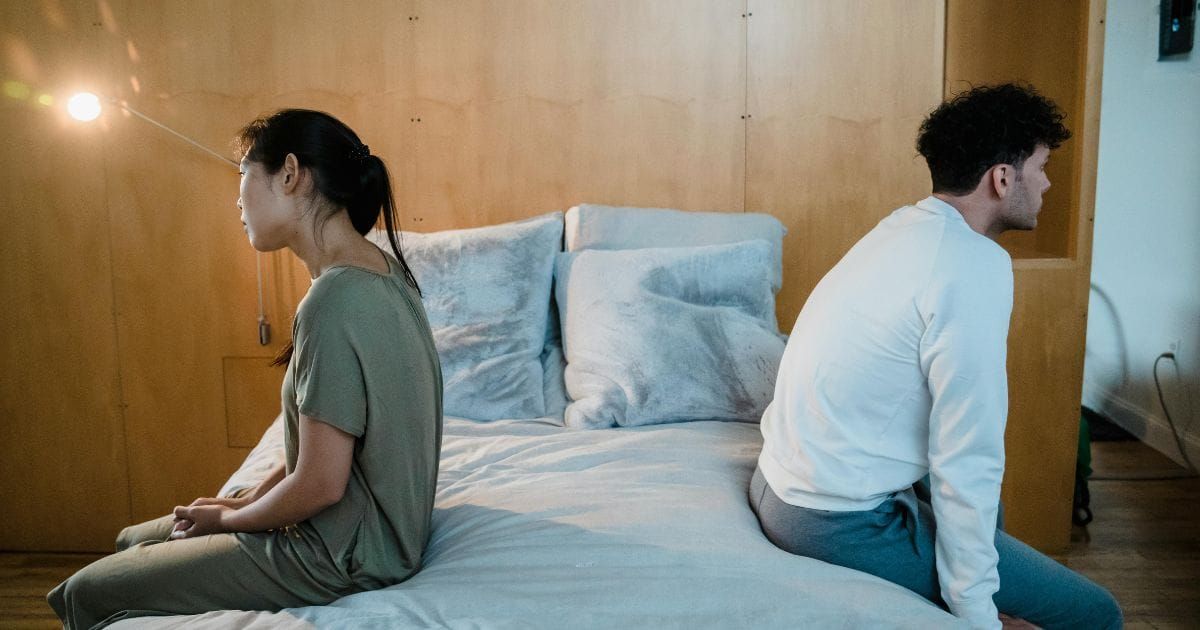
You think it’s just the two of you.
It isn’t.
Every person who ever said something that landed wrong. Every parent who taught you, intentionally or not, what desire was supposed to look like. Every lover who left a mark. Every classmate who said something cruel at exactly the wrong moment. Every religious lesson that told you what good people do and don’t do with their bodies.
They’re all in there with you. In the room, in the bed, in the space between you and the person you love. Most couples never name them. They just feel their presence, in the hesitation, the withdrawal, the desire that goes unexpressed, the pleasure that stops just short of full surrender.
This is the post I’ve been working up to writing. It’s the one that sits underneath everything else I’ve written here about intimacy, shame, and what it takes to build a real connection in a long marriage.
Let me introduce you to some of the people in my bed.
The Classroom
I was twelve years old.
Boys and girls in my grade were starting to notice each other. My best friend had started going steady with a girl. Crushes were forming, kids were starting to pair up, and I had developed a crush on a girl in my class.
A friend came to me with what seemed like good news. She likes you, he said. Ask her to go steady. It’s a sure thing.
He told me to do it publicly, in front of our classmates. A sure thing deserves a moment, right? So I did what any reasonable twelve year old would do with a guaranteed yes. I walked up and asked her to go steady in front of the entire class.
She said no. It was a horrifying public humiliation, and I didn't understand why it happened.
I spent the rest of the day trying to make sense of it. When I found my friend at the end of the day walking home from school, I asked him, what did she say about me? Why did she say no?
His answer was four words that stayed with me for a very long time: she thinks you’re ugly.
I want to be honest about what those four words did. They didn’t just sting in the moment. They settled in. They became a lens through which I saw myself for a long time afterward. Not a good looking individual. Not someone women would choose. Someone who needed to find another way to be valuable.
Small event. Giant repercussion. Most of us have some version of this story, a moment that arrived before we had the defenses to absorb it and left something behind that took years to identify, and even more time to recover from.
My Mother’s Comment
A few years later, my mother said something she almost certainly meant as reassurance.
We were talking, I don’t remember the exact context, and she said: “I didn’t marry your father because he was handsome. I married him because he treated me well.”
She meant it kindly. She was trying to tell me that character matters more than appearance. That the right woman would see past the surface. That there was more than one way to be worthy of love.
What my adolescent mind heard was something else entirely.
People had always said it, you look just like your father. My whole life, that was the observation. Same face, same build, same features. I was my father’s son in every visible way.
So when my mother said she didn’t marry him because he was handsome, my fourteen year old mind did the math quietly and arrived at a conclusion she never intended to deliver. She doesn’t think my father is a good looking man. And I look just like him. So.
The rest of the equation wrote itself. She married him because he was kind. Because he treated her well. Because he was the romantic, the gentleman, the man who showed up for her in the ways that mattered. That was the path. That was how someone like me, someone who looked like his father, who had already been told by a classroom what the alternative looked like, finds love.
So I built a character. The romantic. The nice guy. The one who puts her needs first, who pursues with patience and consistency, who makes himself indispensable through kindness because he has already decided that other currencies aren’t available to him.
I worked hard at that character. I believed in him. And for a long time he felt like the truest version of me I knew how to offer.
The problem was he wasn’t real. And inauthenticity has a smell to it that people, especially women, can detect before they can name it. The nice guy routine kept me safe and kept me at a distance at the same time. I was present and absent simultaneously. Giving everything except the actual truth of who I was.
My mother is gone now. She never knew any of this. She was a good woman who loved her son and was trying to help. That’s the thing about the people we carry into our beds. Most of them had no idea they were coming with us.
What It Built
What those two moments built was a pattern. A way of showing up with women that felt like strategy but was actually survival.
I became the nice guy. The romantic. The one who catered to the needs of the woman he was with at the expense of his own. I pursued. I pleased. I subordinated what I wanted to what she wanted, because what I wanted had already been deemed unworthy of consideration.
I chased aloof women who didn’t love me, because unavailability felt familiar, felt like what I deserved. I chased beautiful women to borrow their value. The logic was simple and devastating: if she chooses me, I must be worth choosing. If someone that desirable loves me, then I am not what that classroom told me I was.
And underneath all of it, the sexual explorer in me went underground. The romantic didn’t disappear the same way. He became the nice guy’s primary tool. The flowers, the pursuit, the patience, the grand gestures. All of it real, all of it genuinely part of who I am, but used as a tool rather than given as a gift. The romantic was how I tried to win women who wouldn’t choose me otherwise. He was the strategy. And when I finally got sick of the strategy and shed the nice guy, I lost him too. Thirty years I was without that person. My wife is only just starting to meet him now. Introducing her to that part of me, the one that was always there, that went underground when I got tired of performing, is one of the unexpected gifts of the honest conversations we are finally having.
The pornography was part of this too. A private space where desire could exist without risk of rejection. Where I could be the person I actually was without anyone telling me that person wasn’t enough. If you’ve read my post on What I Never Told My Wife, you know that story. What I can add here is the root of it, that underground river of desire that had nowhere else to go.
That research journey eventually led me to voices that helped me understand what I was carrying and what to do with it. I wrote about those in Three Voices That Changed How We Think About Intimacy.
What I didn’t understand then was the cost of that hiding. To the women I was with. To myself. To the possibility of real intimacy. You cannot be truly close to someone while performing for them. The nice guy act kept me safe and kept me alone at the same time, even when I was in a relationship.
What Changed
By the time I met my wife in my late twenties, I was exhausted by that fictional character.
I was sick of performing. Sick of chasing women who confirmed my worst beliefs about myself. Sick of hiding the parts of me that were most real, the explorer, the man who had an entire inner life of desire that had never been fully expressed with another person.
So I showed up differently. I fought for my values in our relationship. I expressed what I thought, what I wanted, what I believed. I stopped trying to make myself acceptable and started being myself, which meant occasionally being inconvenient, occasionally disagreeing, occasionally wanting things and saying so.
My wife found that attractive. Not the performance. The person.
That’s a significant thing to sit with. Twenty-seven years later, I believe it’s a large part of why we’re still here. Authenticity attracted the right person in a way that all that careful pleasing never could have. You can’t build a real marriage on a performance. Eventually the performance exhausts you and the person watching it starts to sense something is missing, even if they can’t name what.
What Remains
Here’s the part I haven’t fully resolved. The part that’s still in progress.
A large part of the pleasure I receive from sex comes from giving pleasure. I am a giver, genuinely, naturally, with real joy in it. Watching my wife experience pleasure is one of the great satisfactions of my life and my marriage.
But I have a harder time receiving. Always have.
The twelve-year-old who decided he wasn’t enough for someone to choose, he still shows up sometimes. In the hesitation before asking for what I want. In the instinct to make it about her before it can be about me. In the way receiving feels more vulnerable than giving, because giving keeps me in control and receiving requires trust that the other person actually wants to be there.
There’s another layer to this that belongs in the open. My wife carries her own history, the good girl shaming I wrote about in What I Never Told My Wife. Her wounds mean she can’t always fully give herself. And because I don’t push for it, because that’s not who the nice guy learned to be, we sometimes meet in the middle of each other’s limitations instead of at the full edge of what’s possible between us.
Two people, two wounds, perfectly interlocked. Each one’s hesitation enabling the other’s. That’s not a failure. That’s a portrait of a real marriage doing real work.
The answer, as it always is, is honesty and communication. Naming what’s happening instead of working around it. My wife and I are having those conversations now. Slowly, carefully, with more openness than we’ve had at any point in our marriage. If you’ve read my post on The Anniversary Gift That Changed Our Marriage, you have some sense of what that looks like in practice.
The romantic in me and the sexual explorer in me are coming back up. After decades underground they are being rediscovered. Not alone, but with my wife, in the conversations we’re finally having. That’s the work. It doesn’t have an end date. It just keeps going, each honest exchange making the next one a little easier.
Who’s In Your Bed?
I’ve introduced you to some of mine. The cruel friend in the classroom. My well-meaning mother. The aloof women I chased. The nice guy I performed for so long I almost forgot he was a performance.
You have your own. Everyone does.
The parent who taught you that desire was shameful. The religious voice that told you what good people don’t do. The ex who said something in anger that you’ve never quite been able to unhear. The person who rejected you at the moment you were most vulnerable and left you with a belief about yourself that was never true.
Name them. Not to assign blame. Most of them were doing the best they could with what they had. But to see them clearly. To understand that the hesitation you feel in your most intimate moments, the desire that goes unexpressed, the pleasure that stops just short of full surrender, it often isn’t about you and your partner at all. It’s about the crowd in the room that neither of you invited.
The real work of a long marriage, the unglamorous kind nobody talks about, is clearing the room. One honest conversation at a time.
A note: What I’ve described here applies to solid, committed marriages where both partners are approaching their intimacy journey with honesty and mutual respect. If your relationship is navigating something deeper, please seek professional support. No blog post is a substitute for that.
If anything in this post resonated, I put my five most important insights about long-term intimacy into a free guide — including five action steps you can take right now to move the needle. It's short, honest, and written from 27 years of real marriage. No fluff. Just the things that actually worked for us. Download it free below